
Your kitchen sink is draining slow. Or the toilet gurgles every time you run the washer. Maybe there’s a whiff of sewage in the backyard that wasn’t there last week. Now you’re standing on your phone trying to figure out one thing: how bad is this, really?
Clogged Drain, Main Line, or Septic: How to Tell
Count how many drains are acting up. One slow fixture is a local clog. Two or more backing up at once, especially the lowest ones, points to your main line. A wet, smelly, or oddly green yard means your septic system. A dry yard with indoor backups means the problem is in the pipe, not the tank.
The short version
- One slow drain = a local clog in that fixture.
- Multiple fixtures backing up at once = a main-line blockage.
- Soggy or bright-green yard over the drain field = a septic problem.
- South Louisiana adds its own factors: high water table, clay soil, old pipe, live-oak roots.
- More than 1 in 5 U.S. homes runs on septic (EPA, 2026), so knowing the difference matters here.
- Three problems, three different tools. A specialist diagnoses the whole system first.
Here’s the good news. You can usually tell a lot before anybody shows up with a truck. A single slow drain is a very different problem than your whole house backing up, and both of those are different from a septic system that’s had enough. We run septic and drain calls all over Livingston Parish and the Baton Rouge area, so we’ll keep it plain.
Is It Just One Drain, or Your Whole House?
Start by counting how many drains are acting up. One slow or clogged fixture means a local clog in that drain. Two or more fixtures backing up at the same time, especially the lowest ones, points to your main line. The EPA lists plumbing backups and slow drainage among the first signs of a bigger problem (EPA, “Resolving Septic System Malfunctions,” 2026).
Signs it’s just a local clog
If your bathroom sink drains slow but the shower, toilet, and kitchen all run fine, you’ve got a local clog. It’s stuck in that fixture’s trap or the short branch line behind the wall. Hair, grease, soap, toothpaste, and food scraps are the usual suspects. A local clog stays put. It doesn’t spread to other rooms, and flushing the toilet won’t affect it. It’s exactly what professional drain cleaning in Denham Springs handles day in and day out.
Signs it’s your main line
Now watch what happens when you use water. If flushing the toilet makes the tub or shower gurgle or fill with water, that’s a main-line tell. Same story if running the washing machine backs water up into the lowest drain in the house. That’s the whole house trying to drain through one blocked pipe.
The main line is the single pipe carrying everything out to the city sewer or your septic tank. When it clogs, wastewater has nowhere to go, so it climbs back up wherever it can. That’s usually a floor drain, a downstairs toilet, or a tub. This is not a plunger job. Whether the cause is a clogged main line or a failing septic system, the pattern of multiple fixtures backing up at once is the key clue you can spot yourself (EPA, 2026).
Not sure what you’re dealing with?
You deal straight with the owner, no call center, no runaround. We’ll diagnose the whole system and give you an upfront price.
Get a Free QuoteMain Line or Septic System?
The difference shows up in your yard. A main-line clog gives you symptoms inside the house with a dry, normal yard. A septic problem adds outdoor evidence: standing water or soggy ground over the drain field, sewage odor outside, and bright-green spongy grass over the tank or drain field, even in dry weather (EPA, “Resolving Septic System Malfunctions,” 2026).
So step outside and walk your yard. If the ground over the tank or drain field is wet, mushy, or smells like sewage on a dry day, your septic system is telling you it can’t keep up. Grass that’s suddenly greener and thicker in one strip is another classic sign, because the wastewater is feeding it from below.
Washington State’s health department lists these same signs independently: surfacing sewage, lush green grass over the drain field, and slow drains throughout the house (WA State DOH, “Signs of Septic System Failure,” 2026). When two separate government sources describe the same picture, it’s worth trusting your eyes.
One more clue: timing. If all your drains slowed down together and it’s been years since anyone pumped the tank, the tank is probably full and the drain field is struggling. That’s a septic call, not a snaking job. A septic tank pump-out is often the first step to figuring out what’s really going on.
Warning Signs at a Glance
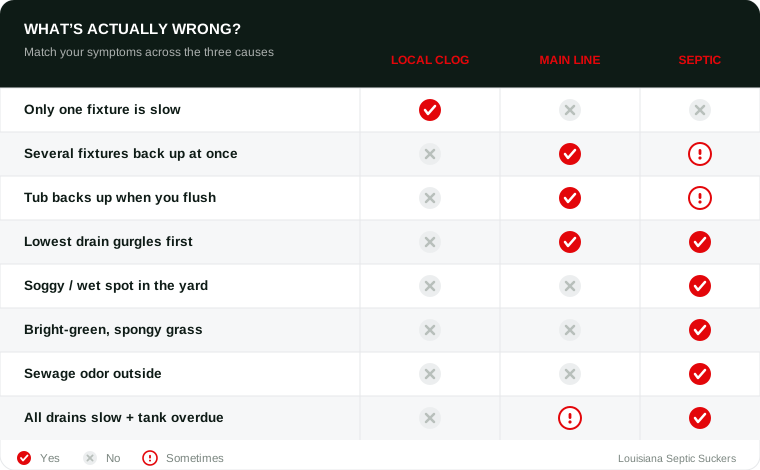
Roughly 16% of new single-family homes built in 2024 used an individual septic system, with the other 84% on public sewer (NAHB Eye on Housing, 2025). Your setup determines where the trouble ends up. Match your symptoms across the three causes below.
Local clog checklist
- Only one fixture drains slow or won’t drain.
- Other drains and toilets work normally.
- Flushing or running water elsewhere has no effect on it.
- You may see standing water in just that one sink, tub, or shower.
Main-line checklist
- Two or more fixtures back up at the same time.
- The tub or shower gurgles or fills when you flush the toilet.
- The lowest drain in the house backs up when you run the washer.
- Your yard is dry and normal, no odor outside.
Septic checklist
- Standing water or soggy ground over the tank or drain field.
- Sewage smell outdoors, near the tank or field.
- Bright-green, spongy grass in one area, even in dry weather.
- All drains slow at once and the tank is overdue for pumping.
Why Is South Louisiana Different?
Our ground works against septic systems in ways a lot of the country never deals with. In parts of Louisiana, high groundwater and heavy clay soils make conventional absorption drain fields unsuitable, so alternative setups like mound systems, aerobic treatment units, and sand filters are common (LSU AgCenter). If you’re on a mound or aerobic system, the failure signs can look a little different, and the fixes definitely do.
The high water table is the big one. When the ground is already saturated, a drain field has nowhere to send treated water, so it surfaces. That’s why a rainy stretch in Livingston Parish can push a marginal system over the edge. It’s also why a plumber who only snakes drains can miss the real problem: a saturated field, not a clog.
Old pipe and big trees
A lot of homes around Denham Springs and Baton Rouge have older clay or cast-iron sewer laterals. Those pipes crack and separate at the joints over time. Roots from our beautiful mature live oaks find those cracks and grow right into the line, which is one of the most common causes of a main-line blockage. When roots are the cause, snaking only buys you a few months. They grow back. Clearing it often takes hydro jetting to clear roots rather than a simple snake.
That’s when we reach for a sewer camera inspection to find the exact problem, so you’re not guessing about where the break is or how bad it is. One thing worth knowing: Louisiana requires onsite wastewater systems to be maintained so they don’t become a public-health nuisance (LA Dept. of Health, LA Admin. Code Title 51, Part XIII). Ignoring a failing septic system isn’t just messy, it’s against the state sanitary code.
When Should You Call a Pro, and Why a Specialist?
Call as soon as you see failure signs. The EPA advises contacting a septic service provider, your local health department, or an onsite wastewater regulator when you notice backups, standing water, odors, or that lush green grass (EPA, “Resolving Septic System Malfunctions,” 2026). Waiting rarely makes any of these problems cheaper.
Here’s the part most homeowners never hear. A clogged drain, a main-line root ball, and a saturated drain field are three different problems that need three different tools. A local clog wants a drain machine. A root-choked main line wants a camera and a jetter. A struggling septic system wants a tank and drain field assessment, not a snake.
That’s the whole case for a septic and drain specialist over a general plumber. A lot of plumbers will snake your drain, hand you a bill, and leave, even when the real issue is out in the yard. We work both sides every day, so we diagnose the whole system before deciding what it needs. Sometimes that saves you from paying for the wrong fix twice.
For reference, national industry estimates for sewer line replacement vary widely, roughly $1,388 to $5,323, with tree-root removal often running about $100 to $600 (HomeGuide, “Sewer Line Repair Cost,” 2026). Those are national estimates, not our prices. We quote upfront so you know the number before we start.
Common Questions About Drain and Septic Trouble
The questions we hear most from South Louisiana homeowners, answered straight.
Can a clogged drain fix itself?
Sometimes a minor clog clears on its own as water pressure builds behind it, but don’t count on it. Grease, hair, and root intrusion don’t dissolve, they build. If a drain keeps slowing down or backs up again within days, the blockage is still there and needs to be cleared properly.
How do I know if my septic tank is full?
Watch for all your drains slowing at once, gurgling toilets, sewage odor outside, and soggy or bright-green grass over the drain field (EPA, 2026). If it’s been years since a pump-out, the tank is likely overdue. A pump and inspection tells you for certain.
Is a gurgling toilet serious?
It can be. A gurgle means air is being pushed back through the trap because water isn’t draining freely downstream. If only that toilet gurgles, it may be a vent or local issue. If the tub gurgles when you flush, that points to a main-line or septic problem worth checking soon.
Should I use liquid drain cleaner first?
We’d skip it. Chemical drain cleaners rarely touch grease plugs or roots, and they can damage older pipe and harm the bacteria your septic tank depends on. On a septic system especially, harsh cleaners cause more trouble than they solve. Mechanical clearing is safer and actually fixes the cause.
Why does my whole house back up when it rains?
In South Louisiana, heavy rain raises an already high water table. A saturated drain field can’t accept more water, so wastewater backs up inside. If your backups line up with rainy stretches, the problem is likely your septic system’s drain field, not a simple clog, and it deserves a full assessment.
The bottom line
One slow drain is a local clog. Multiple fixtures with a dry yard means your main line. A wet, smelly, or oddly green yard means your septic. Not sure which? Call Louisiana Septic Suckers, serving Denham Springs and Baton Rouge since 2016.
Get My Free Quote