
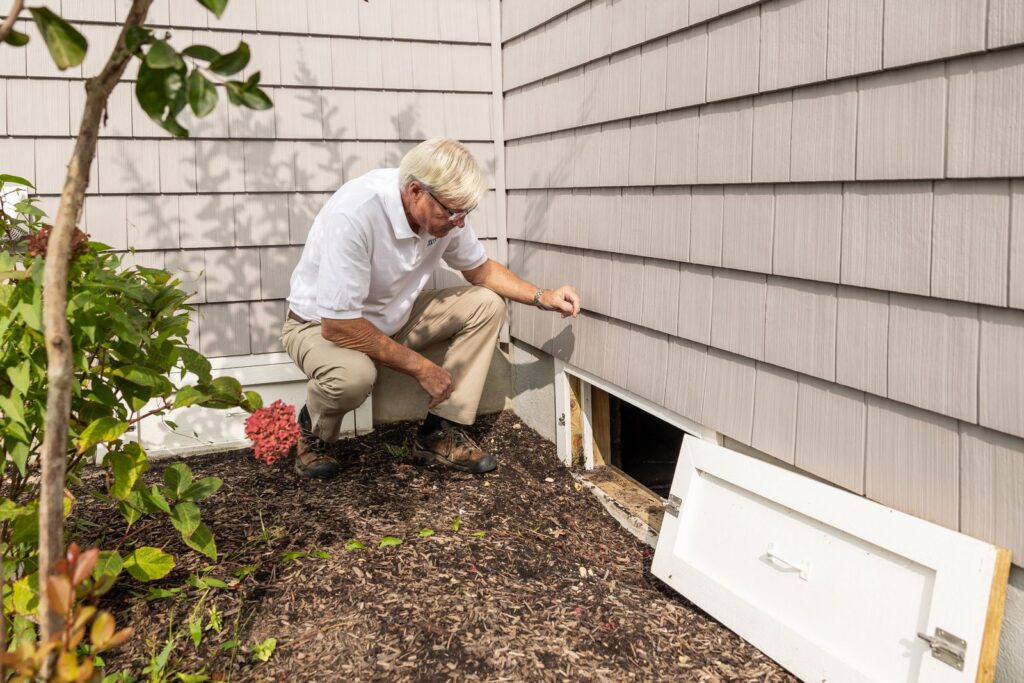
You’re about to buy a house. Somewhere between the offer and the closing table, someone mentioned a “sewer scope,” and now you’re wondering if it’s just another upsell. Here’s the short answer: yes, it’s usually worth it, especially on an older South Louisiana home. A sewer scope costs about the price of a nice dinner out. A collapsed lateral costs thousands. That’s the whole trade you’re weighing.
What a Sewer Scope Tells You Before You Buy
A sewer scope is a live video inspection of the buried sewer line running from the house to the city tap or septic tank. Your standard home inspection does not include it. On older Baton Rouge and Denham Springs homes, a scope that costs around $100 to $250 can catch a failing line that would cost thousands to replace, so it usually pays for itself.
The short version
- A sewer scope is a camera run down the buried sewer lateral, from the foundation to the tap or tank.
- Standard home inspections exclude underground laterals (InterNACHI and ASHI both leave them out).
- InterNACHI cites a typical scope fee of $100 to $250; full line replacement commonly runs $3,500 to $15,000+.
- It finds roots, cracks, offsets, bellies, blockages, and collapsed or crushed pipe.
- Older Baton Rouge and Denham Springs homes carry more risk: expansive clay, high water table, live-oak roots, aging clay/cast-iron/Orangeburg pipe.
- Most worth it on homes 20-30+ years old, lots with mature trees, or before waiving your inspection contingency.
Your standard home inspection won’t catch a bad sewer line. It isn’t designed to. The pipe running from your foundation out to the city tap or septic tank is buried, out of sight, and left off the report. Below we’ll walk you through what a scope is, what it finds, and when it earns its keep. You can also see how a sewer camera inspection works first.
What Is a Sewer Scope?
A sewer scope is a video inspection of the sewer lateral, the buried pipe that carries waste from your house to the city tap or septic tank. A technician feeds a waterproof camera on a flexible cable through a cleanout and records the whole run. Per InterNACHI’s “Sewer Scope Inspections for Home Inspectors,” the camera travels from the foundation to the point of connection.
You watch the pipe from the inside. Cracks, roots, sags, and blockages show up on the screen in real time. No digging, no guessing. The recording becomes part of your due diligence file.
The lateral is your responsibility as the homeowner, not the city’s, in most cases. That’s exactly why buyers scope it before they own the problem. Once you close, a bad line is yours to fix.
Why Doesn’t My Home Inspection Cover the Sewer Line?
Your home inspection skips the sewer line because the standards it follows say to. InterNACHI’s Home Inspection Standards of Practice do not require a sewer scope, and the ASHI Standard of Practice states that general home inspectors are not required to inspect underground items. The buried lateral falls outside both. It’s a specialty inspection, plain and simple.
Think about what a home inspector actually does. They walk the roof, test outlets, run faucets, and check what they can see. A pipe four feet underground isn’t on that list. Nobody’s cutting the report short. It was never in scope.
So when your inspector hands you a clean report, that report is silent on the sewer. It didn’t pass. It wasn’t checked. That gap is why a scope exists as its own service.
Buying an older home in the Baton Rouge area?
We’ll scope the sewer line and show you exactly what’s underground, before you’re on the hook for it.
Schedule a Sewer ScopeWhat Does a Sewer Scope Actually Find?
A sewer scope finds the defects that turn into five-figure repairs later. InterNACHI’s “Sewer Scope Inspection Standards of Practice” lists reportable problems including visible cracks, root intrusion, offsets over 1/4 inch, standing water from bellies over 1 inch, blockages, and pipe that’s crushed, broken, separated, collapsed, or deformed into an egg shape. These are the things you cannot see from the yard.
Roots, cracks, and offsets
Tree roots chase water. They find a hairline crack or a loose joint, push in, and grow into a mass that snags everything flowing past. Offsets happen when pipe sections shift out of line, often from ground movement. Both are common on older lots with big trees.
Bellies, blockages, and collapsed pipe
A belly is a low spot where the pipe sags and holds standing water. Waste pools there and clogs form. A full collapse or a crushed section stops flow entirely and usually means digging. If the scope finds an active clog, drain cleaning may clear it so the camera can finish the run.
Pipe material
The camera also tells you what the pipe is made of. That matters a lot around here, and we’ll get to why in a minute. Clay, cast iron, and Orangeburg each fail in their own way.
Is a Sewer Scope Worth the Money?
A sewer scope is worth it because the numbers aren’t close. A scope typically runs about $100 to $300, and InterNACHI’s “Sewer Scope Inspections for Home Inspectors” cites a typical fee of $100 to $250. A full sewer-line replacement commonly costs $3,500 to $15,000 or more, with complex, deep digs topping $25,000 (national cost data, 2025-2026; typical, varies).
| What you pay for | Typical cost |
|---|---|
| Sewer scope inspection | ~$100-$300 (InterNACHI cites $100-$250) |
| Minor repair / spot fix | ~$1,000-$4,000 |
| Full sewer-line replacement | $3,500-$15,000+ (deep digs $25,000+) |
Run the trade in your head. You spend a couple hundred dollars now to know what’s underground. If the line is sound, you closed with peace of mind. If it’s failing, you just found a bargaining chip worth thousands, or a reason to walk. Either outcome pays for the scope.
Here’s the reasoned math, not a headline stat: if a scope has even a modest chance of catching a five-figure repair, the expected savings dwarf the fee. That logic is why lenders and savvy agents keep recommending it on older stock. Recurring clogs or root masses found on camera often point to a line that needs more than a snake.
Why Older Baton Rouge and Denham Springs Homes Are Higher Risk
Older homes here are higher risk because the ground itself works against buried pipe. Peer-reviewed research in Frontiers in Built Environment (Mostafiz et al., 2021), “Property Risk Assessment for Expansive Soils in Louisiana,” found expansive soils cause more U.S. property loss than earthquakes, floods, hurricanes, and tornadoes combined. Louisiana loses about $66.2 million a year, and the southeastern part of the state has the highest swelling potential.
That expansive clay swells when it’s wet and shrinks when it’s dry. It moves. Buried pipe gets pushed, pulled, and cracked as the soil cycles through our wet and dry seasons. Add a high water table, and groundwater seeps into every crack and loose joint.
Roots and the water table
Live-oak roots are relentless. They range wide and hunt the moisture leaking from a cracked lateral. Once inside, they keep growing. The US EPA notes that groundwater entering aging, cracked laterals and joints is a leading cause of sewer backups and overflows.
Clay, cast iron, and Orangeburg
Older laterals around Baton Rouge and Denham Springs are often clay, cast iron, or Orangeburg. That last one is a real problem. The American Public Works Association’s “The Rise and Fall of Orangeburg Pipe” explains it’s compressed wood fiber and coal-tar pitch, used from roughly the 1940s to the 1970s and advertised for a 50-year life. As the tar dries, the pipe deforms and roots push through. Much of it is now well past its rated lifespan.
When Is a Sewer Scope Especially Worth It?
A sewer scope is especially worth it on any home 20 to 30-plus years old, since aging clay, cast-iron, and Orangeburg laterals are near or past their rated lifespan. Older stock across Livingston Parish and Baton Rouge sits squarely in the risk zone. Push hard for a scope in these situations:
- Mature trees on the lot. Big live oaks and their roots mean a real shot at root intrusion.
- Any history of odor or backups. A slow drain or sewer smell is a symptom worth chasing on camera.
- Before you waive an inspection contingency. Once that’s gone, you lose your leverage to renegotiate or walk.
- Homes on septic. A failing lateral to the tank is expensive and easy to miss.
In our years scoping lines around Denham Springs and Livingston Parish, the homes that surprise buyers most are the mid-1900s builds with a beautiful mature yard. The trees that make the lot look established are often the same roots wrecking the lateral.
Get the results inside your inspection window
Schedule a sewer scope before you close, and buy with your eyes open. Upfront price, no surprises.
Schedule a Sewer ScopeCommon Questions About Sewer Scopes
The questions buyers ask us most, answered straight.
Is a sewer scope included in a standard home inspection?
No. A sewer scope is a separate add-on. InterNACHI’s Home Inspection Standards of Practice don’t require one, and the ASHI Standard of Practice states general inspectors aren’t required to inspect underground items. Your buried sewer lateral is a specialty inspection you have to request on its own.
How much does a sewer scope cost?
Expect roughly $100 to $300, and it varies by market and access. InterNACHI’s “Sewer Scope Inspections for Home Inspectors” cites a typical fee of $100 to $250. Cost depends on how easy the cleanout is to reach and local rates. It’s a small spend next to repairs that run into the thousands.
What problems can a sewer scope find?
Per InterNACHI’s “Sewer Scope Inspection Standards of Practice,” reportable defects include visible cracks, root intrusion, offsets over 1/4 inch, standing water from bellies over 1 inch, blockages, and crushed, broken, separated, collapsed, or egg-shaped pipe. The camera also identifies pipe material, which flags aging clay or Orangeburg lines.
Do older Baton Rouge and Denham Springs homes really need one?
They benefit most. Homes 20 to 30-plus years old often run aging clay, cast-iron, or Orangeburg laterals near the end of their life. Orangeburg was advertised for only a 50-year lifespan, per the American Public Works Association. Add expansive clay soil and mature trees, and the odds of a hidden defect climb sharply.
Why do tree roots and clay soil cause so many sewer problems here?
The ground moves and roots chase water. Expansive Louisiana clay swells and shrinks with the seasons, cracking buried pipe. Frontiers in Built Environment (Mostafiz et al., 2021) found the state’s southeast has the highest swelling potential. Live-oak roots then invade those cracks, and groundwater infiltration worsens backups, per the US EPA.
Scope it before you close
A sewer scope is one of the cheapest smart moves you can make before buying an older South Louisiana home. Don’t waive your inspection contingency blind.
Get My Free Quote